Sagres, Portugal: Complete Travel Guide
| Country | Portugal |
| Region | Algarve |
| Type | Town |
| Best months | May, June, July, September |
| Crowd level | Low |
| Budget | Budget |
| Flight (LON) | 2h 40m |
Sagres sits at the edge of the known world, or at least it feels that way. This small, wind-battered town on Portugal’s southwestern tip is genuinely unlike anywhere else on the Algarve, which is precisely why you should go before the word fully spreads. While the rest of the coast drowns in beach clubs and sunburned package tourists, Sagres remains stubbornly, beautifully raw.
The honest version: this is not a glamorous destination. The town itself is functional rather than pretty, a loose collection of surf shops, unpretentious restaurants, and accommodations that range from decent to basic. The wind is relentless and entirely non-negotiable. Some days it will genuinely prevent you from standing upright at Cape St Vincent. Accept this as part of the deal rather than a disappointment, because that same wind is exactly what carves the landscape into something extraordinary and keeps the crowds thin.
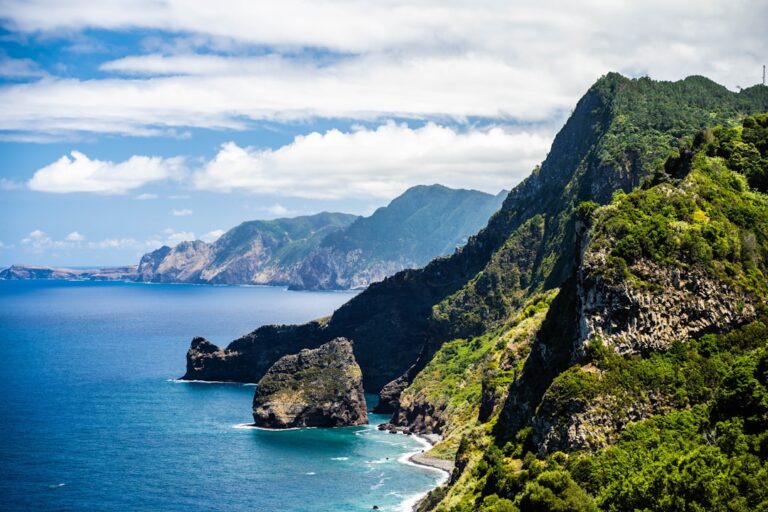
The Fortaleza de Sagres is worth your afternoon. The clifftop fortress where Prince Henry the Navigator supposedly trained the explorers who changed the world carries real historical weight, and the enormous wind rose compass etched into the ground remains genuinely mysterious. Nobody quite knows its age or purpose, which is more satisfying than any certain answer would be. Walk the perimeter walls at golden hour and you’ll understand why this place became a myth. Cape St Vincent, four kilometres west, is the most south-westerly point in continental Europe, and standing there watching Atlantic swells crash against three-hundred-foot cliffs while the lighthouse beam sweeps overhead is one of those travel moments that stays with you.
The area splits naturally into the fortress headland for history and views, and Mareta Beach below town for calmer swimming. Serious surfers head to Tonel Beach, where the waves are powerful and consistent, drawing an international community that gives Sagres a low-key, collegiate atmosphere entirely at odds with the drama of the landscape surrounding it.
What most visitors miss: the birdwatching. Sagres sits on one of Europe’s great migration corridors, and in September the headlands become a temporary home to thousands of raptors, storks, and passerines moving south. It’s world-class and almost nobody comes specifically for it.
Sagres suits independent travellers, surfers, history enthusiasts, and anyone who finds the soul leaves typical beach holidays feeling vaguely hollow. Come in May, June, or September. Bring a windproof layer regardless of temperature. Leave expectations of comfort slightly flexible.
Weather in Sagres
| Month | Avg High | Rainfall |
|---|---|---|
| Jan | 8.5°C | 60mm |
| Feb | 11.4°C | 50mm |
| Mar | 15.6°C | 45mm |
| Apr | 19.9°C | 30mm |
| May | 24.1°C | 20mm |
| Jun | 28.4°C | 10mm |
| Jul | 31.2°C | 5mm |
| Aug | 29.8°C | 5mm |
| Sep | 25.6°C | 20mm |
| Oct | 19.9°C | 45mm |
| Nov | 14.2°C | 60mm |
| Dec | 9.9°C | 65mm |
Plan Your Trip
- Hotels: Search accommodation in Sagres on Booking.com
- Tours & Activities: Browse Sagres experiences on GetYourGuide
- Day Trips: Find Sagres tours on Viator