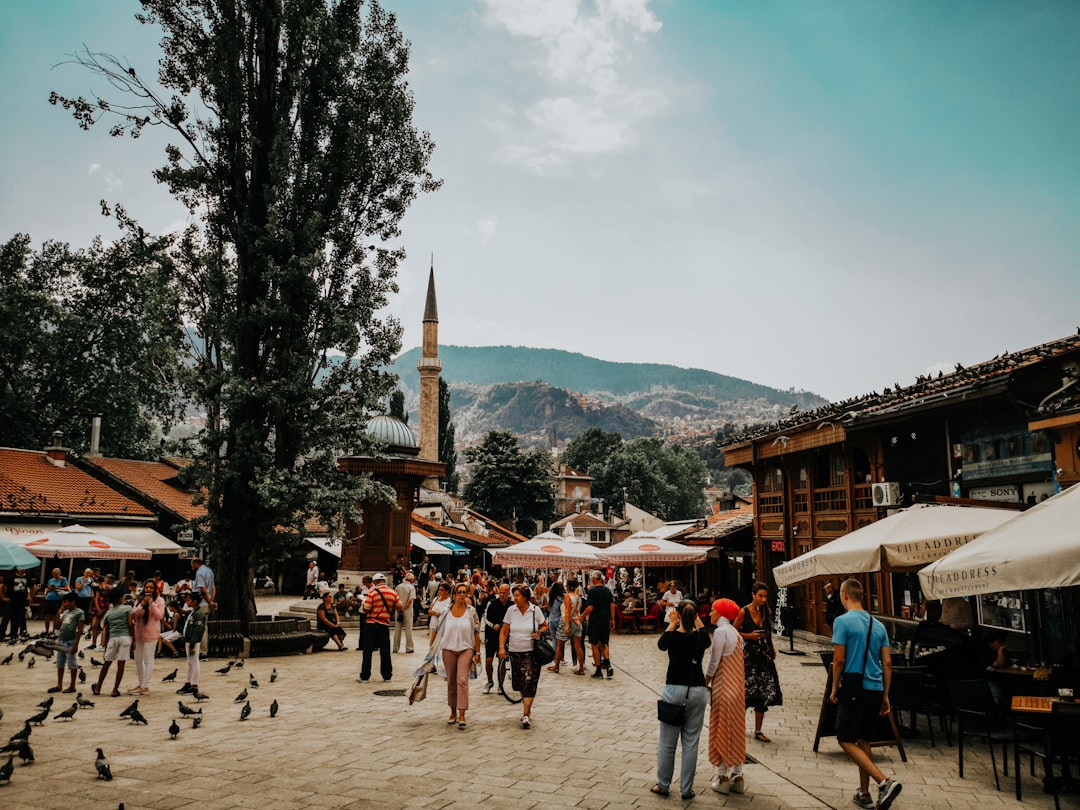
Sarajevo, Bosnia: Complete Travel Guide
| Country | Bosnia |
| Region | Sarajevo Canton |
| Type | City |
| Best months | April, May, June, September, October |
| Crowd level | Low |
| Budget | Budget |
| Flight (LON) | 2h 30m |
Sarajevo earns its place on any serious traveller’s list, but not for the reasons you might expect. Yes, the history is extraordinary – this is the city where a single gunshot in 1914 redirected the entire twentieth century – but what keeps people coming back is something harder to name. It’s the strange, affecting sensation of standing somewhere that has genuinely survived things, and carries the weight of that without performing it for tourists.
The city sits in a narrow valley ringed by mountains, which gives it an almost improbable intimacy for a capital. Walk ten minutes in any direction from the old town and you’re climbing steep residential streets where laundry hangs between Ottoman-era houses and the call to prayer competes with church bells. This is not a metaphor the tourism board invented. It’s just Tuesday morning here. Catholic, Orthodox, Muslim and Jewish communities have traded and argued and occasionally slaughtered each other in this valley for centuries, and the architecture shows all of it, sometimes within a single city block.
Start in Baščaršija, the Ottoman quarter, but push past the first layer of copper souvenir shops. The real neighbourhood is behind it – narrow lanes, working craftsmen, the kind of coffee culture where nobody is rushing anywhere. The Siege Museum is essential and genuinely harrowing; the tunnel that kept the city alive during the 1990s blockade is a forty-minute drive but worth every minute. The Franz Ferdinand assassination site is surprisingly modest, which somehow makes it more powerful.
The thing most tourists miss is Mount Trebević. The cable car reopened after decades of post-war closure and drops you above the city with views that reframe everything you’ve seen below. The abandoned 1984 Winter Olympics bobsled track is up there, slowly being consumed by forest, which is either melancholy or magnificent depending on your temperament. Probably both.
Come in May or September. Summer gets humid in the valley and the city, while never truly crowded, fills with enough tour groups to dilute the experience. Spring brings the mountains green and the café terraces full of locals who look genuinely pleased to be alive, which after everything this place has been through feels like the appropriate response.
Sarajevo suits travellers who want complexity rather than comfort, who can hold beauty and tragedy in the same thought. It is not a relaxing city. It is a significant one, and that’s considerably better.
Plan Your Trip
- Hotels: Search accommodation in Sarajevo on Booking.com
- Tours & Activities: Browse Sarajevo experiences on GetYourGuide
- Day Trips: Find Sarajevo tours on Viator