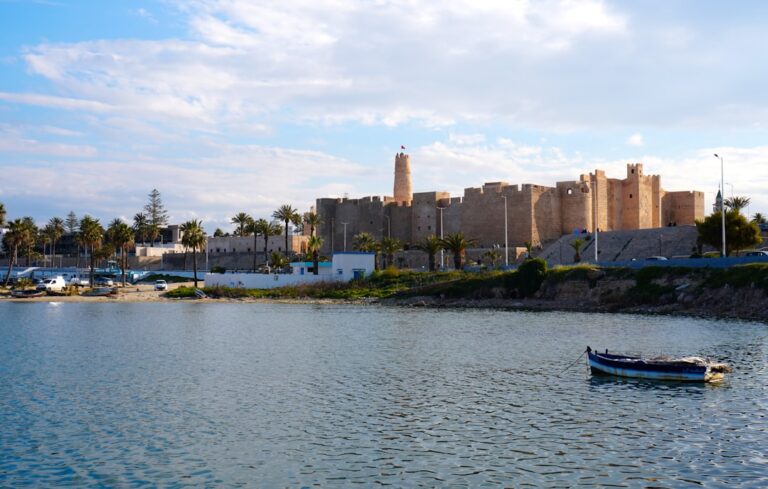
Datca, Turkey: Complete Travel Guide
| Country | Turkey |
| Region | Mugla |
| Type | Town |
| Best months | May, June, September, October |
| Crowd level | Low |
| Budget | Budget-Friendly |
| Flight (LON) | 4h 05m |
Datça earns its reputation as one of Turkey’s last genuinely unhurried places, but you have to want to be here. The Reşadiye Peninsula stretches seventy kilometres into the Aegean like a finger pointing toward Greece, and because there’s nowhere to go beyond it, only the people coming specifically to Datça ever show up. That self-selecting quality keeps the energy remarkably calm — no transit traffic, no cruise-ship day-trippers, no one passing through. What you get instead is a town that moves at the pace of the fishing boats returning in the late morning and the old men playing backgammon who have absolutely no interest in your itinerary.
The landscape is genuinely beautiful in an austere way. Rocky hills covered in maquis scrub, almond orchards that turn extraordinary in February and March, olive groves, and a coastline so deeply indented with coves that you can spend a week exploring by boat and still find yourself somewhere that feels entirely private. Swimming in those coves — water so clear it reads turquoise, then green, then dark blue — is the primary activity here and it doesn’t get boring. Arriving by slow ferry from Bodrum or Marmaris is worth doing once; the approach through the peninsula gives you the geography properly.
Be honest with yourself about what Datça lacks. The nightlife is minimal, the restaurant scene is good but small, and if wet weather settles in for a few days the town offers limited alternatives. The old quarter, Eski Datça, has more charm than the main harbour area — better stone houses, a few excellent small restaurants tucked into narrow streets, and considerably more atmosphere. Stay there if you can.
What most visitors miss is Knidos, at the very tip of the peninsula. It requires either a long drive on a road that tests most hire cars, or a boat trip, and too many people don’t bother. They should. The ancient harbour ruins sit right at the junction of two seas, with columns still standing, a circular temple platform, and views that explain immediately why someone chose this particular spot two and a half thousand years ago.
Datça suits independent travellers, couples who actually like each other’s company, anyone recovering from something, and people who have already done the larger Turkish coastal resorts and found them wanting. Come in May, June, September or October. Bring books.
Plan Your Trip
- Hotels: Search accommodation in Datca on Booking.com
- Tours & Activities: Browse Datca experiences on GetYourGuide
- Day Trips: Find Datca tours on Viator